What Is Web Hosting? Simple & Clear Explanation for Beginners
Introduction
What is web hosting? It is the first thing you should understand before creating any website, because hosting directly affects speed, uptime, security, and SEO. Without web hosting, a website cannot be accessed on the internet. Many beginners buy a domain name but feel confused about hosting—what it does, why it is needed, and how it works.
This beginner-friendly guide explains what web hosting is, how it works, and why choosing the right hosting is important for your website’s performance and growth.
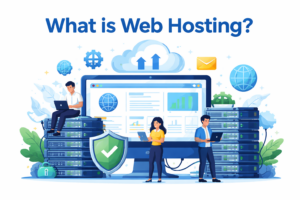
What Is Web Hosting?
Web hosting is a service that stores your website’s files and makes them available on the internet. These files include web pages, images, videos, databases, and emails. When someone visits your website, the hosting server sends these files to their browser.
In simple words:
- A domain name is your website’s address
- Web hosting is the place where your website lives
If you want a deeper understanding, you can read our complete web hosting guide that explains hosting in detail for beginners and advanced users.
How Web Hosting Works
Web hosting works through servers—powerful computers that stay connected to the internet 24/7.
Here is what happens when someone visits your website:
- A visitor enters your domain name in their browser
- The browser sends a request to your hosting server
- The server processes the request
- Website files are delivered to the visitor
The quality of your hosting server affects:
- Website loading speed
- Stability during traffic spikes
- Security of your website data
Web hosting servers work continuously to deliver website files, similar to how the internet infrastructure is explained by Cloudflare.
Why Is Web Hosting Required?
Web hosting is required because personal computers are not designed to serve websites continuously. Hosting providers offer:
- Reliable uptime
- Fast internet connections
- Security protection
- Backup systems
Without web hosting, your website would not be accessible to visitors worldwide. This is why understanding what web hosting is is essential before launching any site.
Types of Web Hosting (Quick Overview)
There are different types of web hosting, each designed for different needs. Below is a simple overview.
Shared Hosting
- Multiple websites share one server
- Low cost
- Best for beginners and small websites
VPS Hosting
- Dedicated virtual resources
- Better performance than shared hosting
- Suitable for growing websites
Cloud Hosting
- Uses multiple servers
- Handles traffic spikes well
- Ideal for high-traffic websites
Managed WordPress Hosting
- Optimized specifically for WordPress
- Automatic updates and security
- Best for WordPress users
Premium Hosting
Premium hosting is a higher-quality hosting solution designed for websites that require better performance, reliability, and support than basic hosting plans. It is not a separate hosting type like shared or VPS hosting, but rather a premium-tier service that focuses on delivering a superior experience.
Premium hosting is best for:
- Business websites
- High-traffic blogs
- Ecommerce stores
- Professional WordPress sites
- Websites where performance and uptime matter
Key benefits of premium hosting include:
- Faster server performance
- Higher resource limits
- Improved security measure
- Priority technical support
- Better stability during traffic spikes
Premium hosting is ideal for website owners who have outgrown basic hosting plans and want consistent performance without technical complexity. Premium hosting is often chosen by websites that need better performance as their traffic grows.
You can explore all hosting types in detail in our web hosting explained pillar guide.
How Web Hosting Affects Website Performance
Your hosting choice directly impacts:
- Page loading speed
- Website uptime
- User experience
- Search engine visibility
Slow or unreliable hosting can cause visitors to leave your site quickly, even if your content is good.Google has confirmed that website speed and page experience play an important role in user satisfaction and search performance.
Can You Change Web Hosting Later?
Yes, web hosting is not permanent. Most websites start with basic hosting and upgrade later as traffic grows. Website migration is common and safe when done properly.
Upgrading hosting is recommended when:
- Your site becomes slow
- Traffic increases
- You need better security
- You outgrow shared hosting
Common Beginner Mistakes with Web Hosting
Many beginners make avoidable mistakes, such as:
- Choosing the cheapest plan without planning growth
- Ignoring renewal pricing
- Hosting multiple sites on low-resource plans
- Skipping backups
Understanding web hosting early helps avoid these problems.
Frequently Asked Questions
Is web hosting required for all websites?
Yes, every website needs web hosting to be accessible online.
Is web hosting the same as a domain name?
No. A domain is your website address, while hosting stores your website files.
Which web hosting is best for beginners?
Shared hosting or managed WordPress hosting is best for beginners.
Does web hosting affect SEO?
Yes, hosting affects speed, uptime, and security, which influence SEO.
Final Thoughts
Understanding what web hosting is helps you make better decisions when building a website. Hosting is the foundation of your online presence, affecting performance, security, and growth.
This beginner guide is part of our web hosting explained series on SemayraHost, created to help website owners choose the right hosting solution with confidence.